What this signal really says
Growth inside a tighter environment rewards efficiency, conversion, and operational clarity. This matters because the signal is less about one isolated announcement and more about a change in how commerce work is evaluated.
Growth inside a tighter environment rewards efficiency, conversion, and operational clarity. Commerce signals rarely stop at a single button or plugin. They tend to move through product data, shopping assistance, payment, fulfillment, and support.
When traffic and trial costs rise, useful global AI work must either improve transactions, create durable discovery, shorten workflows, or lower delivery cost. In that context, the useful question is not whether the topic is hot, but whether it changes a page, workflow, or decision that a builder can test this week.
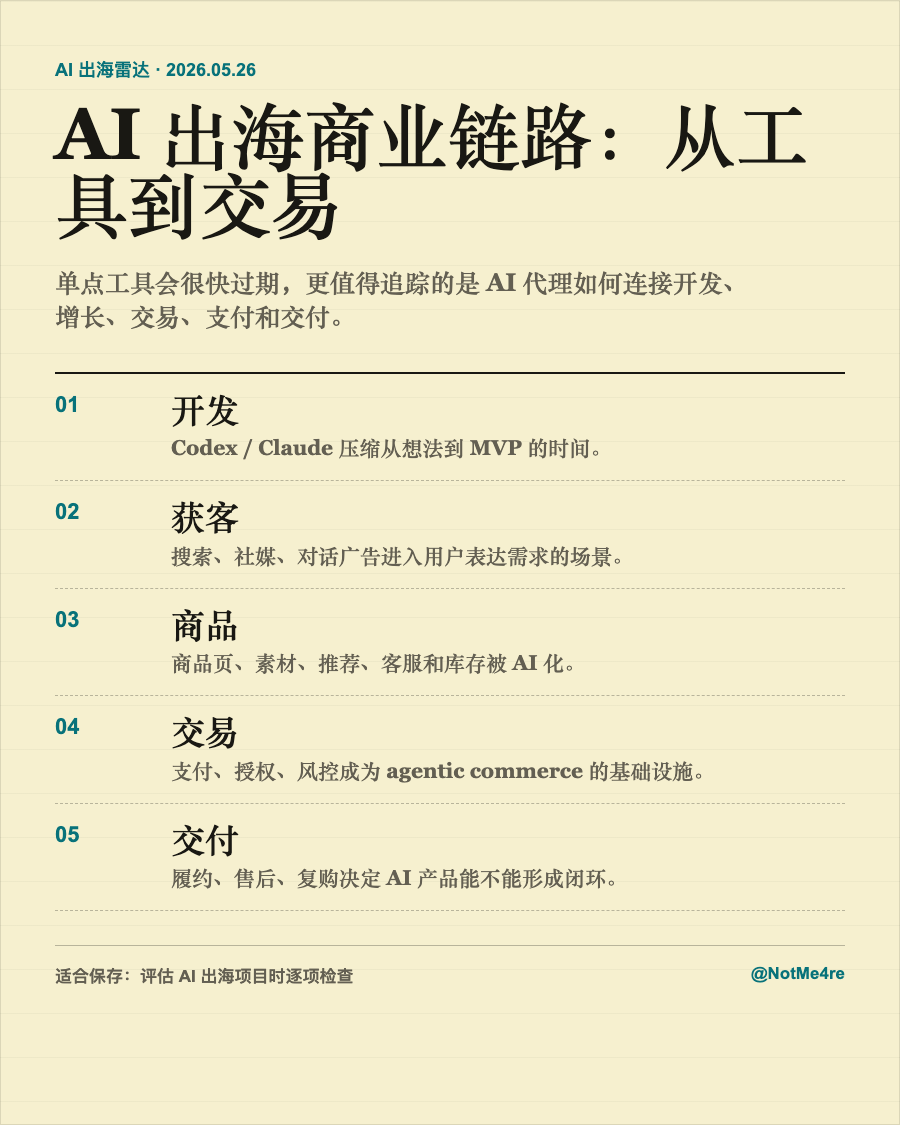
What it means for global AI teams
For Cross-border brands, ecommerce operators, Shopify teams, payment teams, and AI commerce builders, this should be read as an operating prompt rather than a headline. The team needs to translate the signal into what a user can understand, verify, authorize, or act on.
Prioritize AI work that improves conversion or reduces service cost. If that sentence cannot be turned into visible page copy, a checklist, or a workflow boundary, the signal is probably still too abstract to use.
A useful next move
The smallest useful move is this: prioritize AI work that improves conversion or reduces service cost.
Do it on one page or one flow first. A good test is small enough to ship quickly, but concrete enough that search systems, AI agents, and real readers can all understand the same promise.
Where the boundary sits
Treat this as a primary signal, then still check pricing, limits, and real adoption before acting. This is why the original source remains linked at the end of the article: the Radar article is meant to turn a signal into judgment, not replace source verification.